Mastering Wood Joinery: A Comprehensive Guide to Essential Woodworking Joints
Share
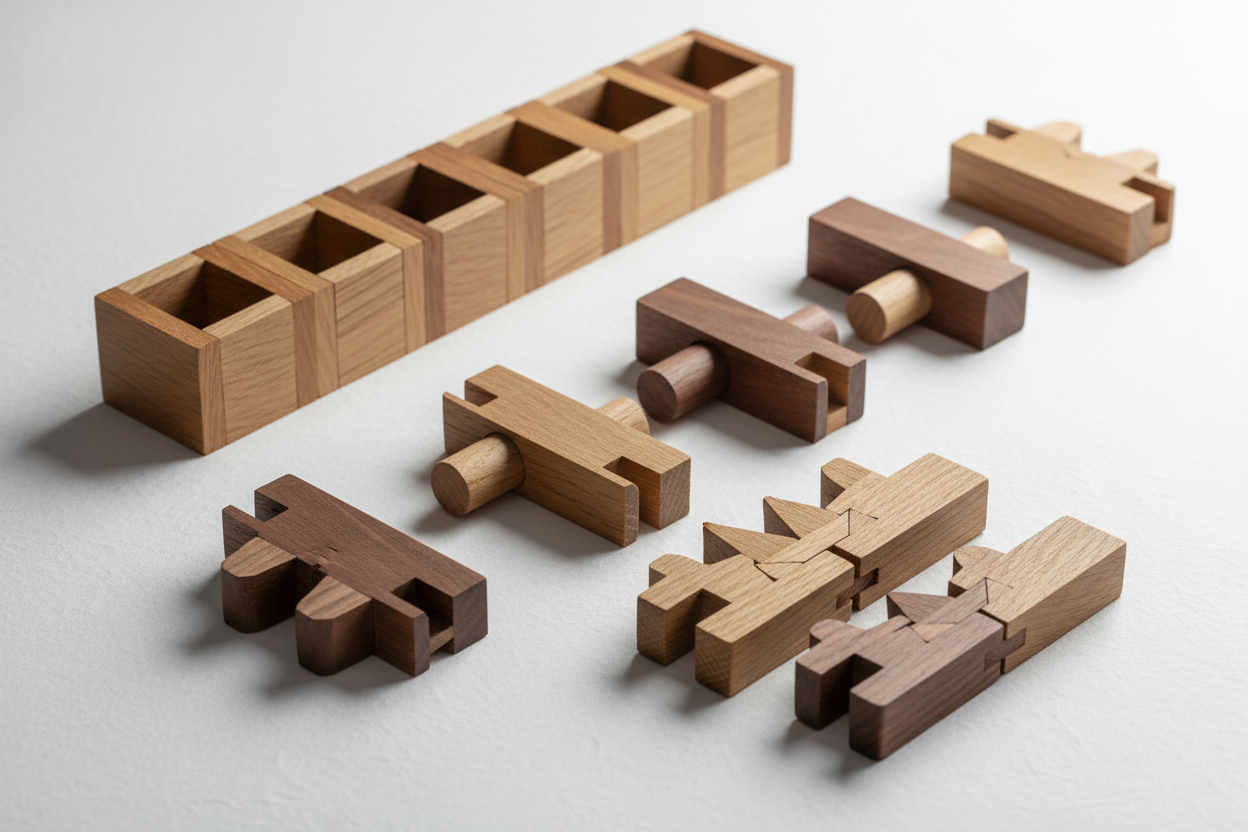
Woodworking is both an art and a science, and one of the key elements that distinguishes a skilled woodworker is their mastery of various joinery techniques. In this comprehensive guide, we'll explore six fundamental wood joints that have stood the test of time, each with its unique characteristics and applications. From the classic beauty of dovetail joints to the versatile biscuit joints, let's delve into the world of precision craftsmanship.
1. Dovetail Joints: The Epitome of Elegance and Strength
Dovetail joints are the epitome of woodworking elegance and strength. Known for their distinctive interlocking pattern resembling the tail feathers of a dove, these joints are prized for their durability and aesthetic appeal. Crafted by cutting trapezoidal pins and tails that interlock seamlessly, dovetail joints are commonly used in drawer construction and high-quality furniture.
Their intricate design not only provides structural integrity but also adds a touch of craftsmanship that stands the test of time. Understanding traditional furniture joints like dovetails is essential for creating heirloom-quality pieces.
The finishing of dovetail joints is crucial to their appearance. Learn more about choosing the right wood finish to enhance the beauty of your joinery work.
2. Mortise and Tenon Joints: The Workhorse of Woodworking
The mortise and tenon joint is the workhorse of woodworking, offering simplicity and strength. Consisting of a protruding tenon and a corresponding mortise, this joint is versatile and widely used in furniture and timber frame construction. Its strength lies in the large surface area for glue or other adhesives, ensuring a robust connection.
Whether used for a simple picture frame or a sturdy door, mortise and tenon joints showcase the beauty of functional simplicity in woodworking. This technique is fundamental to creating statement furniture pieces that combine strength with aesthetic appeal.
3. Half-Blind Dovetail Joints: Strength Meets Subtlety
For those who seek a blend of strength and aesthetics with a touch of subtlety, the half-blind dovetail joint is the answer. Particularly popular in drawer construction, these joints conceal the end grain of the dovetails, providing a more refined and polished appearance. Half-blind dovetails require precision and skill, making them a favourite among experienced woodworkers who appreciate the challenge and the reward of creating seamless, concealed connections.
This level of precision craftsmanship is what sets apart handcrafted furniture from mass-produced alternatives.
4. Biscuit Joints: Quick, Efficient, and Strong
When it comes to quick and efficient joinery without sacrificing strength, biscuit joints are a go-to choice. Using oval-shaped wooden biscuits, this jointing technique involves cutting matching slots in two adjoining pieces of wood, then gluing in the biscuits to create a strong bond. Biscuit joints are valued for their simplicity and speed, making them an excellent option for projects with tight deadlines or when simplicity is key.
They are commonly employed in cabinet and tabletop construction, offering a modern alternative to traditional joinery while maintaining structural integrity.
5. Tongue and Groove Joints: Versatility Meets Stability
Versatility meets stability in the timeless tongue and groove joint. This joint involves a tongue (a protruding strip) on one piece of wood that fits into a groove (a slot) on another piece. Used extensively in flooring, panelling, and cabinetry, the tongue and groove joint excels at providing a snug fit, preventing warping or separation over time.
Its adaptability makes it suitable for both decorative and structural applications, showcasing its enduring popularity. When working with premium hardwoods, understanding the properties of different wood species helps you select the best materials for your joinery projects.
6. Dowel Joints: Classic Simplicity and Reliability
For those seeking a reliable yet straightforward method of joining wood, dowel joints are a classic choice. In this technique, wooden dowels are used to align and reinforce the connection between two pieces of wood. Dowel joints are easy to create and offer a clean, seamless appearance without the need for visible fasteners.
Commonly used in furniture construction, dowel joints are appreciated for their simplicity and effectiveness. They work particularly well when combined with other techniques like steam bending, allowing for both curved and straight joinery in the same piece.
Joinery and Finishing: A Perfect Partnership
The relationship between joinery and finishing is crucial to creating exceptional woodwork. Once your joints are perfectly crafted, proper finishing techniques bring out their beauty. Explore our guide to common woodworking finishes to learn how different finishes enhance various joint types.
For those working with multiple wood species, our guide on mixing wood tones provides expert advice on creating cohesive, professional-looking pieces.
Traditional Techniques for Modern Craftsmanship
At NOIR.DESIGN, we combine traditional joinery techniques with modern sustainable practices. Our approach to reviving traditional woodworking mastery includes using time-tested joinery methods alongside innovative techniques.
This commitment to sustainable craftsmanship ensures that our pieces are not only beautiful and strong but also environmentally responsible.
Caring for Joinery Work
Proper maintenance ensures your joinery work lasts for generations. Learn when and why to reapply wood finish to keep your joints tight and your furniture looking beautiful.
Conclusion: The Foundation of Fine Woodworking
Wood joinery is an art form that marries functionality with aesthetics, and mastering these six fundamental joints opens the door to endless possibilities in woodworking. Whether you're a seasoned craftsman or a novice enthusiast, understanding the strengths and applications of each joint empowers you to bring your woodworking projects to life with precision and beauty.
From creating functional home accessories to building statement furniture pieces, these joinery techniques form the foundation of exceptional craftsmanship. The combination of proper joinery, quality materials, and expert finishing creates pieces that truly stand the test of time.